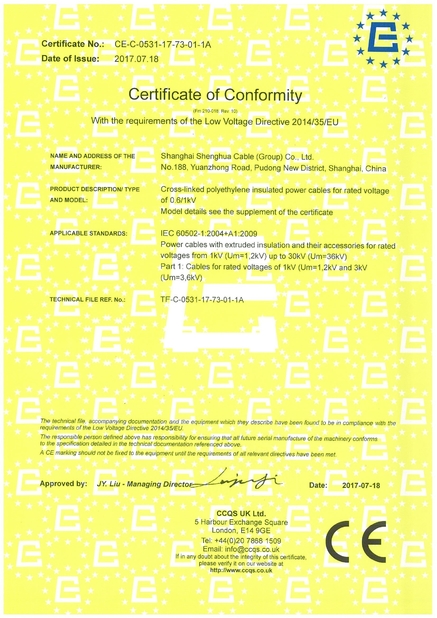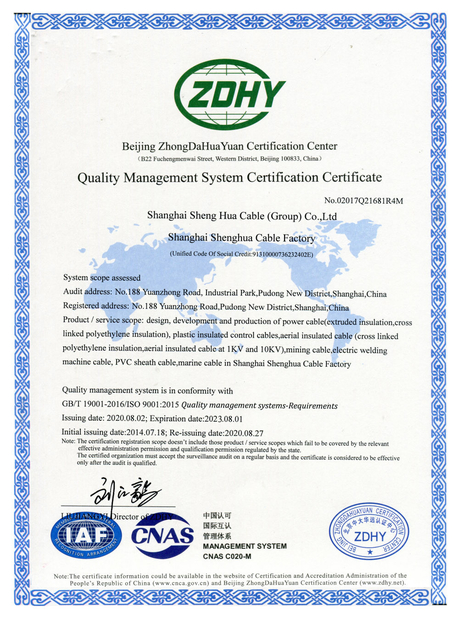
शंघाई Shenghua केबल (समूह) कं, लिमिटेड
Railway and metro projects are among the most demanding cable applications in the world: confined tunnels, high ambient temperatures, heavy vibration, strict fire and smoke requirements and a safety case that has to be documented years before the first train runs. A cable that would be perfectly acceptable in a building can be rejected outright in a metro specification for reasons that have nothing to do with current carrying capacity. This guide explains what rail and transit specifications actually demand, why low smoke and zero halogen performance dominates the requirement, how vibration and bending affect construction, and how to prepare a quotation that meets the technical and documentation requirements. Six answers follow on fire standards, halogen content, vibration and approvals.

The first requirement is fire performance, and it is usually stricter than a building regulation. Tunnel and rolling stock specifications commonly require low smoke, zero halogen behaviour, limited flame propagation, and in many cases circuit integrity under fire for a defined period so that emergency systems continue to operate.
The second requirement is low toxicity. In a tunnel, smoke is the primary hazard, and the specification usually limits smoke density and the acidity of combustion gases. This is why halogen free compounds are demanded even where a PVC cable would otherwise be acceptable on electrical grounds.
The third requirement is mechanical robustness. Cables in tunnels are installed in trays and conduits subject to vibration from trains, and in rolling stock they are subject to continuous flexing and vibration. The conductor class, the sheath compound and the method of support all matter, and the specification usually prescribes them rather than leaving them to the supplier.
The fourth requirement is documentation. A rail project has a safety case, and each component must be traceable to a test report, an approval and a batch record. A cable that meets every technical requirement but cannot produce the paperwork is not accepted, and this is the single most common reason a supplier fails to qualify.
The fifth requirement is consistency over decades. A metro system expects its cables to remain available, unchanged, for the life of the asset, which means the specification will be tight and the approval process for any change will be slow.
The physics of a tunnel explains much of it. A fire in a confined space fills the tunnel with smoke, and the smoke is the killer. Halogenated compounds produce acid gases that damage equipment and injure people, and PVC contains chlorine, so a halogen free compound is required even though PVC performs well in many other respects.
Evacuation explains the circuit integrity requirement. Emergency lighting, ventilation, signalling and communication must continue to operate for a defined period during a fire, which means the cable must survive a fire test while still carrying current, not merely resist flame propagation.
Vibration explains the construction requirements. A cable that is mechanically sound in a static installation can fail at a termination where vibration concentrates stress, and the specification addresses this through conductor class, support spacing and termination design.
Long asset life explains the documentation. A metro operator cannot re-test a cable thirty years after installation, and the only defence against a supplier who quietly changes a compound is a controlled specification with a retained sample and an approval record.
These requirements have a cost. A halogen free, fire resistant cable costs several times a standard PVC cable of the same size, and the documentation and approval process adds further cost and time. A buyer who understands this can plan the budget and the schedule realistically rather than discovering it during tendering.
Read the specification before quoting. Rail specifications are long, and they contain requirements that are easy to miss: the exact fire test, the smoke and acidity limits, the permitted compounds, the marking requirements and the test report format. A quotation that ignores a clause is worse than no quotation, because it consumes the buyer's time.
Confirm which approvals are required and who must hold them. In many rail markets the approval is product specific and factory specific, and a trading company cannot hold it on behalf of a factory. Establishing this early avoids months of wasted effort.
Provide the documentation with the quotation, not after. A technical file that includes the construction, the compound data, the fire test report and the routine test regime is what the buyer needs to evaluate the offer. Suppliers who send a price and a datasheet are not competing seriously.
Plan the samples and the type testing. Rail projects usually require sample approval and often witnessed testing, and both take time. Building them into the schedule is part of quoting competently.
Be realistic about volume and continuity. Rail orders are large but infrequent, and the buyer expects availability over many years. A supplier who can commit to maintaining the compound and the construction is more valuable than one who offers a lower price with an uncertain future. Products such as the Armored XLPE Insulated Power Cable Aluminum Conductor Fire Resistant and the Shanghai Shenghua Power Cable Professional Control Flexible Wire Cable Eco Friendly CE KEMA Certification illustrate the construction style used in transit work, where fire performance and documentation dominate the specification.
Cable installed on a train is subject to vibration, repeated flexing at articulation points, wide temperature ranges and, in some locations, exposure to oil, brake dust and cleaning chemicals. The specification for rolling stock is therefore tighter than for tunnel fixed equipment, and it usually references specific fire and smoke standards for vehicles rather than for buildings.
The conductor must be fine stranded to survive vibration, and the insulation must resist abrasion where cables pass through bulkheads and connectors. Terminations are typically crimped with controlled tooling and inspected, because a loose termination on a moving vehicle becomes a fire risk. The documentation requirement extends to the batch and to the tool calibration.
The connector interface is often specified by the vehicle builder, which means the cable supplier must work to a drawing rather than to a generic specification. A supplier who can produce to a drawing and maintain traceability is more valuable in this market than one with a large catalogue.
The safety case for a rail project requires evidence at component level: fire test reports, smoke and toxicity data, material declarations and, often, a failure modes analysis. This documentation is prepared before the contract, and it is reviewed by the operator's engineers rather than by a purchasing department.
Qualification usually involves sample approval, then a first article inspection, then a period of supply under surveillance. Once qualified, the product and the factory are effectively locked, and any change requires a new submission. That is why rail buyers value suppliers who will commit to maintaining a compound and a construction for a decade.
For the supplier, the barrier to entry is high and the reward is a long term relationship with predictable volumes. For the buyer, the lesson is to start early: a rail qualification cannot be compressed into a few weeks, and a project that begins the process late will either delay or accept a product without the full documentation, which creates a risk that surfaces during the safety review.
Tunnel installation is constrained by access, ventilation and the need to work within possession times. Cables are usually installed on brackets or in trays fixed to the tunnel lining, with supports designed for the vibration and for the fire performance of the system. The supports must not compromise the fire rating, which is why metal supports are used rather than plastic clips in critical routes.
Jointing in a tunnel is difficult, and the design usually minimises joints by using long drum lengths and planning the pulling in stages. Where a joint is unavoidable, it is placed in an accessible location with a fire rated enclosure, and the jointing is done by a qualified jointer with the area protected from dust and water.
The testing regime follows the same logic: continuity, insulation resistance and, where specified, a pressure test on the joint. The records become part of the handover documentation and are retained for the life of the asset.
Rail procurement rewards preparation. Confirm the fire standard and category, the smoke and acidity limits, the approved compounds, the vibration requirements, the approvals and the documentation format before preparing a quotation.
Building the technical file early, and confirming which party holds the approvals, is what separates a serious bid from one that consumes months and delivers nothing.
Rail operators are conservative buyers, and for good reason. A change to a cable specification on a metro system requires engineering assessment, safety case revision and often a period of trial installation. The practical consequence for a supplier is that the first order is hard to win and subsequent orders are durable, and the effort should be planned accordingly.
Communication matters as much as the product. A supplier who provides clear documentation, answers technical questions promptly and maintains consistency earns trust; one who changes a compound without notice loses it permanently. In a market where qualification takes months, reliability is the competitive advantage.
For the buyer, the same logic applies in reverse. Choosing a supplier on price alone, in a market where requalification is slow and expensive, is a false economy. The total cost includes the risk of having to requalify a replacement supplier during the life of the asset, and that risk is rarely priced into the decision.
PVC contains chlorine and produces acid gases and dense smoke in a fire. Tunnel specifications usually require halogen free, low smoke compounds.
The ability of a cable to continue carrying current during a fire for a defined period, verified by a specific fire test. It is required for emergency systems.
Yes. Fine stranded conductors, appropriate support spacing and suitable terminations are specified to survive continuous vibration.
It varies by operator and country, but product specific and factory specific approvals are common. Confirm before quoting.
Typically months, including sample approval, type testing and documentation review. Plan it into the project schedule.
Sometimes, where the specification allows. The fire and smoke requirements usually still apply in tunnels.
Rail and metro cable procurement is a documentation exercise as much as an electrical one, with fire performance, halogen content, vibration resistance and traceability all prescribed. Read the specification fully, confirm the approvals, supply the technical file with the quotation and plan the type testing into the schedule. Shanghai Shenghua Cable Group produces low smoke zero halogen and fire resistant cable constructions for transit and tunnel applications, with the test reports and batch traceability that rail specifications require, and it will confirm which approvals apply to your project. Send your specification through our contact page and our engineers will prepare a compliant technical file. Related items include the KVV 7x1.5mm2 Oxygen-Free Copper PVC Insulated Control Cable 450/750V Signal Transmission, the shan power cable Household LSZH PVC Insulated Power Cable , Low Halogen Cable For Lighting, the CE Rated Indoor Control Cables Male / Female Connector For Industrial Applications, the 1-5 Cores XLPE Insulated Power Cable With PVC / LSZH Jacket, the Shenghua Group Power Cable NYY NYCY Electrical Fire Resistant Cable For Buidings / House Wiring and the 1-5 Cores XLPE Insulated Power Cable With Cable Size 1.5-630mm2 And PVC / LSZH Jacket.
The cheapest bid in a rail project is rarely the lowest cost over the life of the asset, and the qualification record is the reason.
Consistency, documentation and availability are worth more than a small percentage on the price.